
Appearance
Reports
Reports allow you to create formatted human readable outputs from Data Definitions. Reports can be output in a number of formats such as Excel and PDF. You configure the Report to print the data exactly as you need it.
Reports can used to create custom notifications to track exactly what data is being processed. As an Action processes data you can send reports to users detailing the data that was sent or received. Users can then act of these reports if necessary.
Reports can also be used to create forms critical to the business process you are configuring. For example when importing Orders into your financial software you may wish to create Picking Slips that are sent to the warehouse so they can begin picking the order. Reports can be sent based on logic, if for example the incoming order does not pass some business rule checks you can send a notification to an operator to review the order, or if it does pass you can print the Picking Slip.
Reports can be based of DB, File, or Web Definitions. The report writer is a typical "banded" report writer. This means it is broken in bands being title, header, groups, detail, summary, and footer. This is similar to reports written in SQL Server Reporting Services (SRS) or Crystal.
When assigning a Data Definition to a Report it is considered a design time assignment, when coming to use the Report in an Action you have the chance to reassign the Data Definition (run time assignment). This allows you to use the same Report in multiple Actions each with their own Data Definition..
Create a Report
Open the Flow Designer
Navigate to
Configuration > Components > ReportsRight click
Reportsand selectNew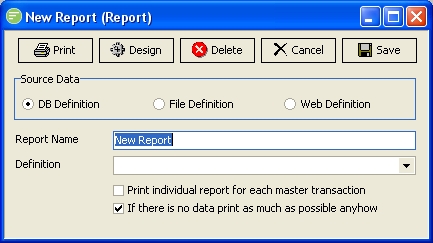
Fill in the details and click
Save. See Report
Edit a Report
TIP
A single left click on the Map will also open the edit window
- Open the Flow Designer
- Navigate to
Configuration > Components > Reports - Right click the desired
Reportand selectEdit - Change the details as required and click
Save. See Report
Delete a Report
Open the Flow Designer
Navigate to
Configuration > Components > ReportsRight click the desired
Reportand selectDelete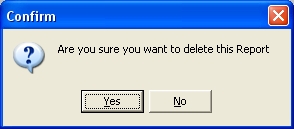
Click
Yesto confirm your choice
Copy a Report
- Open the Flow Designer
- Navigate to
Configuration > Components > Reports - Right click the desired
Reportand selectCopy - The copy of the Report will display in the edit window. Change the details as required and click
Save. See Report
Export a Report
Open the Flow Designer
Navigate to
Configuration > Components > ReportsRight click the desired
Reportand selectExport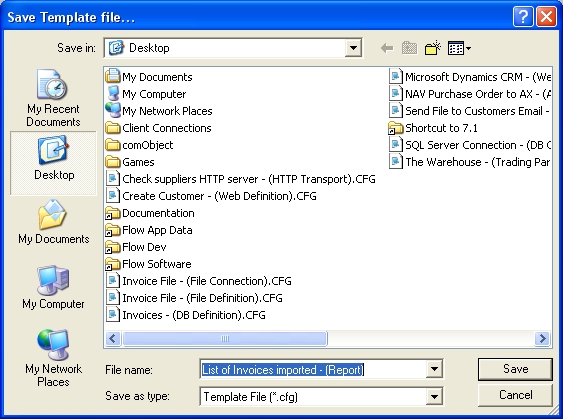
The template file will be assigned a default file name consisting of the name and type of the module. Change the name if desired and click
Save. See Exporting and Importing
Import a Report
Open the Flow Designer
Navigate to
Configuration > Components > ReportsRight click
Reportsand selectImport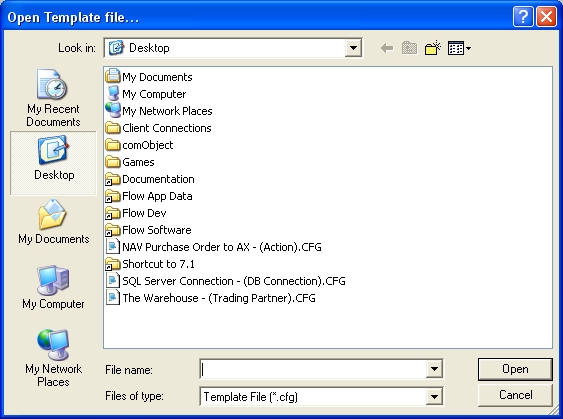
Select the Template file you wish to import and click
Open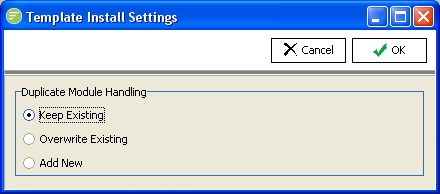
Choose the import method and click
OK. See Exporting and Importing A confirmation screen will show what has been imported.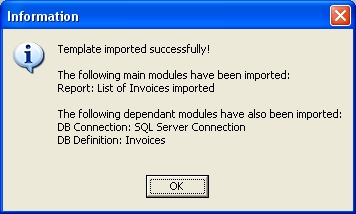
TIP
Note how dependant modules like the DB Connection and DB Definition have been imported. When exporting a module that is dependant on other modules, these dependant modules are also included in the Template so that it can be recreated exactly when imported
Change Security on Report
- Open the Flow Designer
- Navigate to
Configuration > Components > Reports - Right click the desired
Reportand selectSecurity - Change the details as required and click
Save. See Managing Security
Refresh list of Reports
- Open the Flow Designer
- Navigate to
Configuration > Components > Reports - Right click
Reportsand selectRefresh